
| Archived Save the Train forum articles - 2005 to 2010. See below
Manchester C-Charge 'To Go Ahead' - 7782/12523 Written by Lee on Monday, 9th June 2008 The government looks set to allow congestion charging for drivers entering and leaving Manchester (link below.) http://news.bbc.co.uk/1/hi/england/manchester/7442725.stm Plans for a two-ring scheme, charging up to Re: Manchester C-Charge 'To Go Ahead' - 7782/12524 Written by Lee on Monday, 9th June 2008 The first steps to full DfT approval have been taken (link below.) http://nds.coi.gov.uk/environment/fullDetail.asp?ReleaseID=370004&NewsAreaID=2&NavigatedFromDepartment=False http://www.dft.gov.uk/pgr/regional/tif/gmtifbid.pdf Quote from Campaign for Better Transport (link below) : http://www.bettertransport.org.uk/campaigns/traffic_reduction/blog [quote="Campaign for Better Transport"]The Manchester congestion charge will improve life in the city by cutting traffic and providing for some radical public transport improvements. We've consistently told Government that congestion charging will only work if alternatives to driving are greatly improved, and it seems they've listened: in Manchester, bus, tram and rail services will all get a huge boost. If similarly well-thought-out schemes are introduced in other places it will be good news for communities, the environment, and traveller choice.[/quote] Re: Manchester C-Charge 'To Go Ahead' - 7782/12536 Written by Lee on Wednesday, 11th June 2008 The Re: Manchester C-Charge 'To Go Ahead' - 7782/12549 Written by Lee on Saturday, 14th June 2008 Road-pricing policies should be re-examined to deal with congestion, and rail reliability monitored, a transport committee report has said (link below.) http://news.bbc.co.uk/1/hi/uk/7452332.stm It examined the Department for Transport (DfT) annual report for 2007. It said local authorities were not keen to apply for road-pricing-scheme funding and the transport department lacked interest in rail punctuality. The DfT said the government had been early in meeting its targets on "rail reliability and road safety". And it is said it is "already implementing innovative measures to tackle congestion". In its report, the committee said it feared a growth in the number of motorists whose vehicles are not registered, taxed or insured. It said the DfT should identify its "main priorities". Louise Ellman, who chairs the committee, said there was also a need for the department to be clear in "showing how progress can be measured". She said there should be an indication of the way in which "environmental and economic targets can be achieved". On the issue of rail services, the committee's annual report said MPs were concerned that the DfT appeared to have lost interest in rail punctuality and reliability. The committee warned that a loss of focus in this area could lead to a reversal of progress achieved during the past five years. It also called for the government to take a decision on high-speed rail. Re: Manchester C-Charge 'To Go Ahead' - 7782/12682 Written by Lee on Wednesday, 23rd July 2008 As the proposals stand the M60 Motorway, which cuts right through the centre of Denton, will form the outer charging zone for the congestion charge (link below.) http://www.andrewgwynne.labour.co.uk/denton_c-charge_bus_back_on_the_road Re: Manchester C-Charge 'To Go Ahead' - 7782/12728 Written by Lee on Tuesday, 19th August 2008 The people of Greater Manchester will vote for congestion charging, according to secret polling data obtained by the M.E.N (link below.) http://www.manchestereveningnews.co.uk/news/s/1063187_53pc_support_for_ccharge A survey of more than 5,000 people shows 53 per cent support plans to use the peak-hour charge to help fund massive investment in public transport. A total of 40 per cent say "no", seven per cent are undecided. Crucially, more people support the proposal than oppose it in every one of Greater Manchester's 10 boroughs. Council chiefs have agreed the charge will only be brought if it wins support in at least seven in a December referendum. Opponents will take heart from the fact that support was "softer" than opposition. Only 21 per cent said they would "definitely" accept it with 32 per cent saying "probably". That compares to 27 per cent saying they would "definitely" reject the deal and 14 per cent saying "probably". link to index of articles |
|||
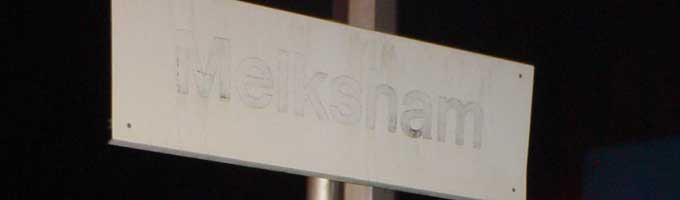
Save the Train was the campaign to bring an approriate train service back to and through Melksham. Most big contributors are still around writing at the Coffee shop forum where new members are very welcome. The train has been saved - sort of - we have stepped back up from an unusable service to a poorish one but it's doing very well. We did that through setting up the TransWilts Community Rail Partnership. That fulfilled its early objectives; it has been taken over by local and regional government types who are now doing medium and long term work. The team from this forun can also be found at the Melksham Rail User Group (which was the Melksham Rail Development Group at the time these articles were written and we had no users. We mustn't loose sight, though, that the train service remains poor and needs our community support in marketing and campaigning to keep it going in a positive direction ... and all the more so when we're expecting to find a different normallity once we get out of the Coronavirus Pandemic and head for zero carbon via the climate crisis. Yes, it's saved ... it's now a key community facility ... the need for enhancement and the strong and near-universal local support remain, and the rail industry and goverment remain slow to move and provide the enhancements even to level us up with other towns. Please support the Melksham Rail User Group - now very much in partnership rather than protest with the rail industry and local government, including GWR, TransWilts and unitary and town councils. And please use the trains and buses, and cycle and walk when you can. -- Graham Ellis, (webmaster), February 2021 | |||
|
|||
Further Information:
Home
Current Summary
Daily update
User forum
Consultation
Service now
Service future
Future Analysis
Recent Statistics
Recent letters
Letter to DfT
Save the train
Presentation
Support us
Other Maps
Station facilities
Station approach
Pictures
Trains diverted
History
About Melksham
Site Map
About this site