Save the Train forum

Dedicate to campaigning to retain an appropriate "TransWilts" passenger train service ... Swindon - Chippenham - Melksham - Trowbridge - Westbury - Dilton Marsh - Warminster - Salisbury ... and to other services too

THIS FORUM IS NOW A READ-ONLY ARCHIVE. Please use our Coffeeshop Forum for new posts

link to main site
Save the Melksham Train

Welcome, Guest. Please login or register.
May 23, 2012, 08:14:47 AM

Login with username, password and session length
Search:     Advanced search
Recommended service - hourly, according to the GWRUS. Let's work towards that service and towards ensuring all services are used.
7889 Posts in 5009 Topics by 97504 Members
Latest Member: bamsfommA
* Home Help Search Calendar Login Register
+  Save the Train
|-+  General Discussion
| |-+  The Future
| | |-+  The next 20 years - submission to regional spatial strategy enquiry in public
0 Members and 1 Guest are viewing this topic. « previous next »
Pages: [1] Print
Author Topic: The next 20 years - submission to regional spatial strategy enquiry in public  (Read 2539 times)
Graham Ellis
Administrator
*****
Offline Offline

Posts: 2062


View Profile
The next 20 years - submission to regional spatial strategy enquiry in public
« on: June 26, 2007, 09:18:49 AM »

I'm at the Enquiry in Public into the Regional Spatial Strategy in Exeter this afternoon (taking up a last-minute opportunity that arose) and I've been writing a slightly rushed summary that's looked far further ahead - 20 years - than most reports.  Here's the final draft of what I hope to get the opportunity to say this afternoon.  I'll let you know how it goes.

The future of transport in the "West Wilts Corridor"

The West Wiltshire area, including Warminster, Trowbridge, Melksham and Westbury are linked to Chippenham, Swindon, and areas outside the South West Area by what is known as the "A350 corridor".  Major freight and passenger traffic flows through this route too, connecting Southampton, Salisbury and the ports or Portsmouth and Poole to Chippenham, Swindon, the Midlands and the North and to a lesser extent across to Bristol and South Wales.

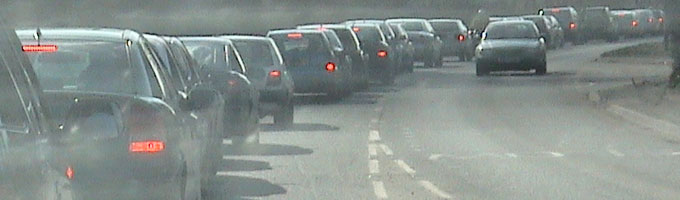
This road is already overcrowded, with nose-to-tail traffic routine in the rush hour, and sometimes at other times of day too, with delays of up to an hour incurred when roadworks reduce any of the single carriageway sections (and that's most of the route) to alternate line working.  As some sections go through towns and villages, that is quite a frequent occurrence, with already traffic use "rat run"s such as through the centre of Lacock and Melksham Forest.

The passenger railway service along this corridor was a limited service of 5 trains per day from 2001 to 2006, during which traffic grew at between 10% and 35% per annum depending on which measures are taken.  Passenger numbers at Melksham ststion grew by over 600% in the 10 years from 1996 to 2006.  However, the service was cut back last December based on an assumption of 0.8% growth from 2002 / 2003 figures - an assumption already proven to be so unduly pessimistic that it lead to a decision that was inappropriate. Services now run only in the early hours before the morning peak, and in the evening.

I am a businessman running a company in Melksham, West Wiltshire, welcoming visitors to my business on a daily basis. Last year, around half of my customers arrived by train, usually from a long distance away. This year just 3 customers have arrived by train in six months. They had to pay extra expenses for a night's stay on their arrival, and were unhappy at the need to wait until 19:50 to leave.  Very few of our customers use the bus, even though we supply information; the majority now use private cars all the way, with around 15% using a taxi from Chippenham.

There are two options available for handling increased traffic in and out of West Wiltshire via this corridor over the next 20 years.

With all transport assigned to the road, some 22 km of this route would need upgrading from old single track roads through towns and villages into dual carrageways, and a further 8 km of recent single carriageway road engineered for future dualling would also need upgrading. Eleven roundabouts on the newer sections would need attention - either to be replaced with flyovers or flying junctions.  Extrapollating from the currently quoted cost of 32.5 million pounds to join points 4 km apart, with a much lower rates allowed for dualling the remaining 8km and replacing roundabouts, you're looking at a budget of some 300 million pounds for this scheme AT TODAYS COSTS.

The environmental impact of the proposed Westbury Eastern Bypass has already been well aired. Without the extra investment highlighted above, it would serve only to move the traffic jam north to Yarnbrook and Beanacre. That further investment would cause other major environmantal concerns further Noth, such as in the area around Notton, Lackam and the National Trust village of Lacock.

The railway infrastructure from Warminster through to Chippenham and Swindon already exists, and continues to be maintained to an express train standard. One section of the line from North of Trowbridge to West of Chippenham is single track, but on a double trackbed; otherwise the line is double track.

An hourly passenger train service could be introduced as soon as December 2008 (the limiting time factor being the time taken to train drivers, and current line capacity limiting train frequency but not length) at an initial annual subsidy cost of under 1 million pounds. This would be a short term subsidy if service grew in line with the last five years of records, and that growth would be probable.

Significant further passenger train growth could be accommodated by redoubling the line from Bradford South to Thingley, and laying in extra tracks against already-existing platform faces at Chippenham and Westbury, as already proposed in Network Rail business plans. Further additional capacity in the form of additional laybys for slower freight trains could be provided at Thingley and Lacock where the earthworks from former sidings remain in place.  Additional stations at White Horse Business Park, Staverton / Holt, Lacock, and Wootton Bassett would improve ridership and utility levels and transfer further growth onto the rail servivce, at a total investment of around one eighth to one fifth of the road-only option.

Freight traffic is already increasing on the railway line and the increased capacity on existing trackbed would provide adequate resources for the substantially increased traffic - local, regional and long distance - that the corridor will be called upon to carry in the next 20 years and beyond.

Some road improvements would still be necessary for a strategic transport system fir for 2026 with dramatically increased population in West Wiltshire. In particular, access to via a road to the West of Westbury to link the A350 to the A36 with access to the West Wilts trading area, and improvements in the Yarnbrook and North Melksham / Beanacre area. Rail / Road interchange improvements at Warminster, Westbury (for freight as well as passengers), and Melksham will also be required to provide door to door public transport service, largely using enhanced existing / modified bus routes.

Of special note:

a) The environmental footprint of the rail / road option for transport in this area would only be a fraction of the footprint of a practical road only scheme that provided capacity for the next 20 years.

b) Beyond 20 years into the future, the rail / road option would countinue to offer a more fuel efficient transport network.

c) The population is aging, with an increasingly high proportion of the population having to rely on reliable public transport for their travel.  It is therefor incumbent on this enquiry to provide a solution that offers good public as well as private transport opportunities.

d) Significant extra capacity can be added to the road / rail proposal at relatively low cost by lengthening trains. Longer trains with the same loadings per coach are more cost effective than shorter ones.

e) It takes 110 minutes by bus from Westbury to Swindon, but just 45 minutes by train.  With an express bus via a newly improved A350, the journey by bus would still take twice as long as the journey by train. Other timings on the corridor have similar statistics.

f) Other journey opportunities with significant passenger and freight flows, now and into the future, would be covered by this road / rail option. This includes journeys such as Swindon and Chippenham to Salisbury and Southampton, where the improved rail option will cut traffic pressure on the A36 route, on Salisbury,  in the area of Southampton, and directly southwards from Swindon.   Outside the region to the North East, improved connections or through services to Oxford, Milton Keynes and Cambridge (East-West Rail, now under way) would be commercially probably starting in 5 to 8 years, with potential connection or through servcie onward from Westbury to Frome, Yeovil, Honiton and Exeter.

g) The Parkman report of 2001 recommended a service similar to the one proposed, with trains extended to Frome / Radstock or Southampton.  Information for the A350 improvements is also from a Mouchel/Parkman report.

h) I am also an active member of the local Chamber of Commerce and on the branch organising committee of the Federation of Small businesses, and I can confirm the support of both organisations for the low cost railway upgrade in the economic interest of the area.  I can also confirm the support of parish, town, district, and county councillors.

i) A Petition to the Prime Minister calling for an appropriate train service on the Swindon to Westbury Route and beyond run by myself in January and February 2007 drew 1700 signatures in just 3 weeks, making it the domestic public transport petiton with the most signatures at the time. Signatories included 8 Members of Parliament (all major parties represented) and 5 MEPs.  An "appropriate" service for 2007 has been defined as at least one train every 2 hours.

i) The Local Transport Plan of Wiltshire County Council sees the rail service along the West Wilts Corridor as a strategically important service, and I commend this report.

In conclusion, I ask that the document in question today be amended to include the strategic development of both Rail and limited road improvements along the corridor linking Warminster, Westbury, Trowbridge and Melksham to Chippenham, Swindon and beyond.

Graham Ellis
Well House Consultants, 404 The Spa, Melksham, Wilts
http://www.wellho.net   graham@wellho.net
+44 (0) 1225 708225 (phone)  +44 (0) 1225 707126 (fax)
Logged
Pages: [1] Print 
« previous next »
Jump to:  

Powered by MySQL Powered by PHP Save the Train | Powered by SMF 1.0.5.
© 2001-2005, Lewis Media. All Rights Reserved.
Valid XHTML 1.0! Valid CSS!
Page created in 0.071 seconds with 19 queries.